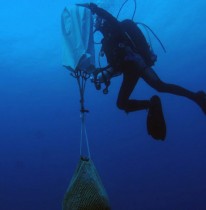
Archaeological surveys beneath the Red Sea are uncovering shipwrecks and submerged remains that shed new light on Saudi Arabia’s maritime past and its connections with ancient civilisations.
For thousands of years, the Red Sea was a major maritime corridor linking the Arabian Peninsula with Africa, Asia and the Mediterranean. Ships carried goods and people across vast distances, while the sea also served as an important route for migration and pilgrimage.
Traces of these journeys have survived on the seabed in the form of shipwrecks, cargoes, structures and other archaeological deposits, preserving evidence of the extensive maritime networks that once crossed the region.
Underwater cultural heritage generally includes traces of human activity of cultural, historical or archaeological significance that have remained wholly or partially submerged for at least 100 years. Saudi Arabia ratified UNESCO’s 2001 Convention on the Protection of the Underwater Cultural Heritage in 2015, reinforcing efforts to document and preserve archaeological remains beneath its waters.
Investigations along the Saudi coast of the Red Sea have since revealed evidence spanning several historical periods.
In 2012, a joint archaeological survey was carried out along the coastline between Rabigh and Shoaiba by the Saudi authority then responsible for antiquities and Philipps University of Marburg in Germany. The project continued through subsequent survey campaigns and identified the remains of several shipwrecks, including vessels dating to the Roman and early Islamic periods.
Further underwater research was conducted in 2015 and 2016 at the Umluj shipwreck site in collaboration with researchers from the University of Naples L’Orientale. The wreck demonstrated the remarkable potential of submerged archaeological sites to preserve evidence of maritime activity centuries after ships disappeared beneath the sea.
A much larger investigation followed in 2022, when Saudi Arabia’s Heritage Commission launched an archaeological survey of the waters between Umluj and Ras Al-Sheikh Hameed.
Working with national and international scientific institutions, archaeologists surveyed approximately 400 square kilometres of the Red Sea. More than 25 underwater archaeological sites were identified and documented, underlining the considerable archaeological potential of Saudi Arabia’s western coastline.
Researchers employ a range of technologies to locate and record submerged remains. Marine sonar and bathymetric mapping are used to identify structures and anomalies on the seabed, while GPS technology enables sites to be precisely mapped.
Underwater photography, high-definition video and photogrammetry provide detailed records of archaeological remains. Photogrammetry can also be used to create three-dimensional models of shipwrecks and other submerged sites, allowing researchers to study their condition and spatial organisation while limiting physical disturbance.
When closer examination is necessary, archaeological divers can carry out controlled excavations, investigate exposed remains and collect samples for scientific analysis.
Preserving the context in which objects are discovered is particularly important in underwater archaeology. The position of artefacts and their relationship to one another can provide valuable information about a ship’s cargo, construction and use, as well as the possible circumstances surrounding its loss.
The Heritage Commission is continuing to survey and map Saudi Arabia’s underwater cultural heritage in cooperation with universities, research centres and specialist organisations. The programme also seeks to develop local expertise in archaeological diving and underwater documentation, while creating digital models that can support the long-term monitoring and preservation of submerged sites.
According to the Saudi Press Agency, the discoveries highlight the importance of viewing the Red Sea as an archaeological landscape in its own right.
Far from being simply a boundary along the western edge of the Arabian Peninsula, the Red Sea served for centuries as a major route of commercial and cultural exchange. The shipwrecks and other remains preserved beneath its waters provide tangible evidence of those connections, gradually revealing a more detailed picture of Saudi Arabia’s place within the maritime networks that linked some of the ancient world’s major civilisations.
 NOTES