An archaeological team in Dortmund has discovered an extensive workshop area dating to the Roman Imperial period, including evidence of pottery production and metalworking outside the borders of the Roman Empire.
Since mid-August, archaeologists from the Landschaftsverband Westfalen-Lippe (LWL), working together with Dortmund City Archaeology, have been investigating a remarkable settlement dating from the 1st to the 5th centuries AD.
“We have discovered a workshop area here with extensive archaeological features,” said excavation director Dr Eva Cichy of the Olpe branch of LWL Archaeology for Westphalia. “This is the first discovery of its kind in the western part of the Germanic settlement area. In addition to the first pottery kiln, we found metalworking workshops that were exceptionally well preserved.”
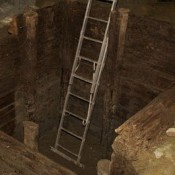
The excavation team documented several areas containing pits, kilns and hearths.
One of the most significant aspects of the discovery is the evidence it provides for Germanic metalworking and the recycling of Roman metal objects east of the Rhine, beyond the frontier of the Roman Empire.
“One of the most fascinating aspects of the Roman Imperial period east of the Rhine, and therefore outside the Roman Empire, is Germanic metalworking,” explained Prof. Dr Michael Baales, head of the Olpe branch of LWL Archaeology for Westphalia.
“It has long been known that, particularly during the later Roman Imperial period, Germanic communities recycled large quantities of Roman metal objects acquired through trade or as booty,” he added.
Until now, however, archaeological features directly associated with this activity had been lacking. According to Tobias Zacharias of Dortmund City Archaeology, this makes the newly discovered site significant beyond the region itself.
Jan Rosbeck, also of Dortmund City Archaeology, explained how the recycling process worked. Roman scrap metal was melted in crucibles placed inside furnaces. The furnaces were round to oval structures with clay walls, into which air was introduced from the side using bellows in order to regulate the temperature.
It is not yet known what types of pottery were produced in the pottery kiln.
The excavations are now almost complete. Archaeologists plan to remove the best-preserved kiln in its entirety so that this exceptional feature can eventually be put on public display.
 NOTES