Gresky, J., Clare, L. (2026). First burials give insights into mortuary rites at Göbeklitepe, Early Neolithic Türkiye. PLOS ONE 21(9): e0358979. DOI: 10.1371/journal.pone.0358979.
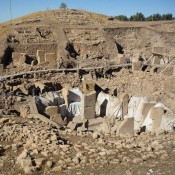
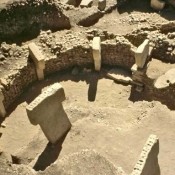
Famous for its monumental structures with their characteristic limestone pillars, Göbeklitepe has been the subject of more than three decades of archaeological research within the framework of long-standing Turkish-German cooperation involving the German Archaeological Institute (DAI).
During the Pre-Pottery Neolithic, the dead were generally buried within settlements rather than in separate cemeteries, often beneath house floors and at the thresholds of domestic buildings. At Göbeklitepe, however, fragmented human bones recovered from the fill of the monumental buildings have raised questions about the treatment and deposition of human remains at the site.
The recent discovery of the first two intact burials, dated to the Pre-Pottery Neolithic B (PPNB) in the mid-9th millennium BC, provides important new evidence for interpreting these remains. Taphonomic analysis suggests that some dispersed human bones may have originated in intact burials that were subsequently displaced as settlement deposits from higher areas of the mound slipped into the lower-lying monumental buildings.
While this offers a possible explanation for the distribution of human remains at Göbeklitepe, other mortuary practices are also evidenced at the site. The findings contribute to our understanding of the diversity of burial practices in Neolithic Anatolia.
Here you can find more information about the burial practices in Göbeklitepe: https://www.science.org/content/article/bones-link-10-000-year-old-temple-complex-village-not-skull-cult.