Archaeologists excavating a Roman settlement at Pilisszentiván in Hungary have uncovered a rare lead statuette of Venus, together with coins, tools and other objects shedding new light on everyday life at the ancient community.
The 2026 excavation at the Pilisszentiván–Hárs Forest site was the fourth season of archaeological research at the Roman vicus, or village. Led by Bence Simon of the Department of Ancient Archaeology at Eötvös Loránd University (ELTE), the project involved archaeology students, staff from Archeovertex Kft. and volunteers from local heritage and community archaeology organisations.
This year’s work focused on determining the extent of buildings previously identified around the Hársas spring and gaining a better understanding of how they were used.
The most notable discovery was a lead statuette depicting Venus Pudica, found during a metal-detector survey. The find is particularly important as it is the first known object of a religious nature discovered within the Roman settlement.
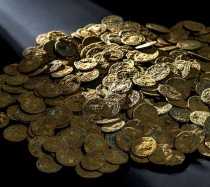
Other finds included a fragment of a leaded-bronze mirror, iron tools, fibulae — brooches used to fasten clothing — and Roman coins, providing further evidence of activity at the site.
Excavations also continued in the residential area and in the northern room or forecourt of a structure known as Building E. Here, archaeologists uncovered an area paved with stone slabs, similar to surfaces previously identified around other buildings at the settlement. The paved area may have been connected with working or economic activities.
At the northern end of the excavation, the team encountered an undisturbed layer of rubble containing a large quantity of pottery. The assemblage included several complete vessels as well as an intact pair of iron tongs. Researchers hope that further study of these finds will help clarify the function of the building and provide a clearer picture of the daily lives of the settlement’s inhabitants.
Although the 2026 field season has now concluded, analysis of the archaeological remains and artefacts is continuing. Researchers hope to return to Pilisszentiván next year to investigate further questions concerning the development, function and inhabitants of the Roman settlement.
 NOTES