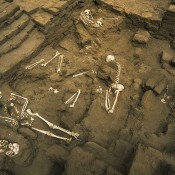
Archaeologists excavating the Huaca de la Luna temple complex in northern Peru have discovered the approximately 1,400-year-old tomb of a child believed to have belonged to the Moche elite. The burial, accompanied by an exceptional collection of ceramic offerings and metal objects, provides valuable evidence of the funerary practices and social hierarchy of this pre-Hispanic civilization.
The discovery was made by researchers from the Huacas de Moche Archaeological Project on the Uhle funerary platform, near the Courtyard of the Serpents. Previous excavations in this area had uncovered tombs of adults believed to have occupied prominent positions in Moche society. The presence of a child buried with elaborate offerings suggests that high social standing may also have been attributed to individuals at a very young age.
According to project director Carlos Rengifo, the tomb measures 1.20 metres in length, 70 centimetres in width and 1.20 metres in depth. Its construction follows a funerary tradition characteristic of the Moche culture.
The burial contained 32 ceramic objects, including decorated plates, jars and bottles featuring representations of birds, prisoners, warriors, deities and scenes of ritual sacrifice and combat. Some of these objects are particularly notable for their unusual imagery and sophisticated craftsmanship.
One vessel depicts a coastal lagoon separated from the sea by a narrow strip of sand. Its decoration includes fish, birds and two frogs, animals associated with water and fertility. Archaeologist Enrique Zavaleta explained that such imagery may have symbolised environmental conditions, particularly the presence of moisture or the arrival of seasonal rains.
Another remarkable object is a vessel representing a prisoner, distinguished by its unusual use as a ceramic mould. Researchers also identified an elaborately decorated bottle incorporating separately manufactured elements, including a feline face forming part of a headdress, feather ornaments and a warrior’s shield. The combination of modelling and moulding techniques demonstrates the considerable technical expertise of Moche potters.
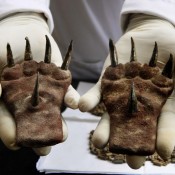
Metal objects were also recovered from the burial. Archaeologists identified what appears to be a mask surrounding the child’s skull, possibly made of copper and originally decorated. A further metal element was discovered near the bones of the feet. Additional examination will be necessary to determine the composition and significance of these objects.
The discovery is particularly important because the Uhle platform had previously yielded high-status adult burials. The child’s elaborate funerary assemblage raises questions about the relationship between age, inherited privilege and social identity in Moche society.
Excavations will continue until the entire funerary assemblage has been carefully recovered. The ceramic objects will subsequently undergo conservation to preserve their original appearance and surviving colours.
The research forms part of a broader programme conducted by the Huacas de Moche Project and the National University of Trujillo. Alongside the investigation of funerary contexts, archaeologists are studying ancient production areas and workshops near Huaca de la Luna. The long-term objective is to incorporate these spaces into the site’s visitor circuit and eventually display the discoveries at the Santiago Uceda Museum.
 NOTES