Discoveries in Saqqara are endless! An inscribed tomb and two wooden statues, as well as a group of probable medical instruments in the Egyptian necropolis, have been announced on the occasion of the Minister of Tourism and Antiquities’ visit to the enormous archaeological site just south of Cairo. During his visit to the Saqqara archaeological site, the Minister inspected the work of several archaeological missions operating in the area, including the Czech archaeological mission at the tombs of the High Priests of Ptah and senior Old Kingdom officials.
The Tomb of Weni
According to an official MoTA report, the Egyptian archaeological mission affiliated with the Supreme Council of Antiquities (SCA) unearthed a tomb belonging to an individual named Weni, who held high-ranking titles, including Mayor and Lord of the City of Elkab, while the wooden statues display human figures in a rare devotional posture. Weni’s tomb lies in the cemetery of King Merenre, just northwest of the king’s pyramid.
The mission has uncovered a mudbrick mastaba containing several burial shafts. One leads to an inscribed burial chamber belonging to an individual identified as Weni, who held several high-ranking administrative and religious titles during the Old Kingdom.
During his visit, the Minister descended into the burial shaft, where Dr. Amr El-Tibi, Director General of the Saqqara Archaeological Area and Head of the Archaeological Mission, provided a detailed explanation of the newly discovered tomb, its history, the circumstances of its discovery, and the significance of the inscriptions preserved on its walls.
For his part, Dr. Hisham El-Leithy, Secretary-General of the Supreme Council of Antiquities, explained that the importance of the discovery lies in the new information it provides about the architectural layout of funerary mastabas during the Old Kingdom, the religious and funerary practices associated with them, and the social and administrative status of the tomb’s owner.
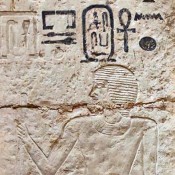
He added that Weni’s burial chamber is among the most significant architectural elements discovered within the mastaba. Its inscriptions have survived in relatively good condition, allowing archaeologists to identify the tomb owner’s name and several of his administrative and religious titles. These include “Mayor,” “Sem Priest,” “Overseer of Every Royal Kilt,” “Treasurer of the House of the North,” “Sole Companion,” and “Lord of the City of Elkab.”
These titles reflect the diversity of Weni’s administrative and religious responsibilities, as well as his connections with royal institutions during the Old Kingdom.
Mr. Mohamed Abdel Badie, Head of the Egyptian Antiquities Sector at the Supreme Council of Antiquities, reported that excavations also revealed a vaulted chamber situated directly above Weni’s burial chamber.
Archaeologists found several objects inside this chamber, most notably two small wooden statues depicted in an unusual devotional posture. These objects represent an important contribution to the study of funerary equipment and the functions of different architectural spaces within ancient Egyptian mastabas.
The collection of bronze instruments, believed to have been used for medical purposes, was also discovered inside Weni’s burial shaft. Such objects are relatively rare in funerary contexts. Notably, the inscriptions in the burial chamber do not indicate that Weni held the title of physician. The presence of these instruments therefore raises important questions requiring further investigation to determine their exact function and their relationship to the tomb’s owner.
The mission also uncovered a false door belonging to a woman named Sekhet-Nebty, who held several religious titles, including that of “Priestess of Hathor.” This discovery provides additional evidence of women’s religious roles during the Old Kingdom.
Dr. Amr El-Tibi further explained that preliminary studies of Weni’s skeletal remains have provided information about his health and age at death. The analysis indicates that Weni died after the age of 50 and suffered from several health problems during his lifetime, including advanced dental and periodontal disease, as well as skeletal changes consistent with repeated physical stress. These findings clarify health and living conditions during the Old Kingdom. Together with the inscriptions, architectural features, and archaeological objects discovered at the site, medical observations offer valuable insights into different aspects of Weni’s life and social standing.
The archaeological mission continues its archaeological, architectural, linguistic, and artistic studies of the discoveries, alongside analyses of the associated funerary contexts and objects. These investigations aim to determine the functions of the different architectural units within the mastaba and understand how they were used during successive phases of its history.
The discovery forms part of the scientific excavations conducted by the Supreme Council of Antiquities in the cemetery of King Merenre at South Saqqara.
These excavations seek to uncover further archaeological evidence that will enrich our understanding of the area’s history and the development of administrative, religious, and funerary practices during Egypt’s Old Kingdom.
Inspection of the Czech Mission: the tombs of Sabou and Ptahshepses
The Minister’s visit included an inspection of work by the archaeological mission of the Czech Institute of Egyptology, which has recently rediscovered several Old Kingdom tombs, including those belonging to High Priests of the god Ptah and senior state officials.
These discoveries are part of a long-term research project to rediscover and document tombs that were partially excavated in the 19th century, then covered by sand and lost from view again. According to Dr. Hisham El-Leithy, Secretary-General of the Supreme Council of Antiquities, the Czech mission’s work is significant because it rediscovered tombs whose excavations had remained incomplete since the 19th century. In particular, the French archaeologist Auguste Mariette, founder of the Egyptian Antiquities Service, carried out the first excavations of these tombs between 1858 and 1860. Mariette discovered approximately 160 tombs dating to different periods of the Old Kingdom. However, his excavations were limited to specific sections, including offering chapels, “serdabs” (statue chapels), and some burial chambers. The remaining architectural elements were neither fully excavated nor comprehensively documented before sand gradually covered the tombs, and they disappeared once again. The Czech mission’s renewed investigation allows researchers to study and document them using modern scientific methods and uncover new details about funerary architecture and the religious and social lives of high-ranking officials during the Old Kingdom.
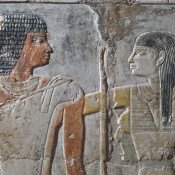
The inspection included the tombs of Sabou and his son Ptahshepses, both of whom held high-ranking positions during the Old Kingdom. Briefed by Dr. Mohamed Megahed, Deputy Director of the Mission, the Minister examined the architectural features, inscriptions, and decorated scenes, especially Ptahshepses’ burial chamber, which contains a limestone sarcophagus with his remains. The mission also presented new discoveries in the area, such as the offering chapel of Ikhetnefert, Sabou’s wife, which, as Dr. Miroslav Bárta, Director of the Czech Archaeological Mission, explained, was one of the most significant results of the recent excavations, since Mariette had been unable to locate it during his earlier investigations. The mission also uncovered a false door decorated with scenes depicting Ikhetnefert alongside her husband and their two sons, Ptahshepses and Ra-nefer. These scenes provide valuable new information about the family and its relationships.
Dr. Bárta added that Sabou’s tomb, situated north of his son’s tomb, measures 54 × 28 meters and is estimated to have originally stood about five meters high. Its exterior façades feature architectural decoration imitating the façades of royal palaces. The offering chapel contains well-preserved reliefs depicting Sabou and his son Ptahshepses overseeing processions of offering bearers. The scenes stand out for their precise execution and high artistic quality.
The mission also relocated Ptahshepses’ tomb using satellite imagery and field surveys. The tomb covers more than 900 square meters and includes an offering chamber and an entrance decorated with reliefs depicting processions of offering bearers and scenes of animal sacrifice.
Mr. Mohamed Abdel Badie, Head of the Egyptian Antiquities Sector at the Supreme Council of Antiquities, said one of the tomb’s most important discoveries was its burial chamber, accessed through a massive descending passage on the eastern side.
Inside the chamber, archaeologists discovered a limestone sarcophagus containing the remains of the tomb’s owner. Ptahshepses held high-ranking positions under four Fifth Dynasty kings: Sahure, Neferirkare, Raneferef, and Nyuserre.
According to archaeological studies, Ptahshepses is considered the first official from outside the royal family to marry an Egyptian princess; his wife, Khamaat, was the daughter of King Userkaf, founder of the Fifth Dynasty. This marriage reflects the exceptional status and influence that Ptahshepses enjoyed during his lifetime.
Dr. Mohamed Megahed further explained that, although the tomb of Ptahshepses had been robbed in antiquity and its jewelry and precious possessions removed, the remains of his mummy were preserved, allowing a team of Egyptian anthropologists to examine and study them. The results indicated that Ptahshepses died at an age exceeding 60 years, consistent with the information recorded in his autobiographical inscriptions. This was considered an advanced age by ancient Egyptian standards.
Dr. Megahed added that the mission is continuing its research and conservation work at both tombs, while also pursuing excavations to uncover the remaining tombs of the forgotten cemetery at Saqqara. These efforts are expected to shed further light on the history of high-ranking officials and priests during the Old Kingdom and provide comprehensive documentation of the tombs’ important architectural features, artistic elements, and inscriptions.
Finally, the Minister was briefed on the mission’s plans for the coming period, including continued excavations, scientific studies, and conservation work. He emphasized the importance of maintaining these efforts to uncover further aspects of ancient Egyptian civilization and enrich scholarly understanding of its history.
 NOTES