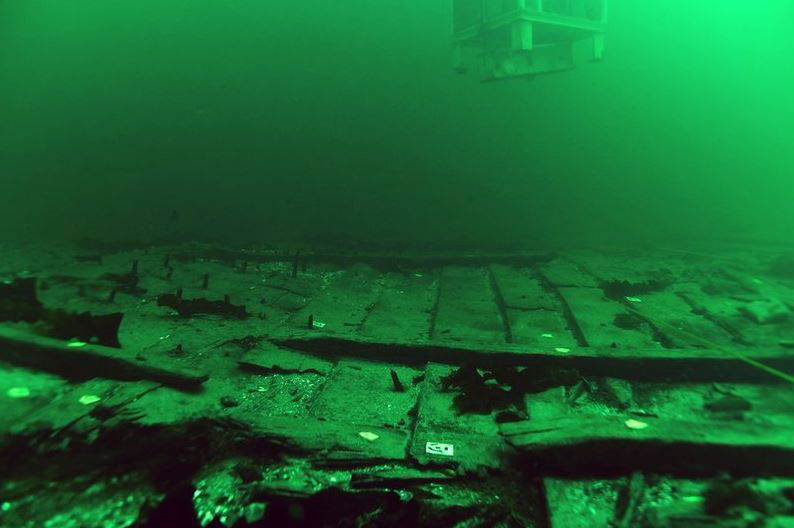
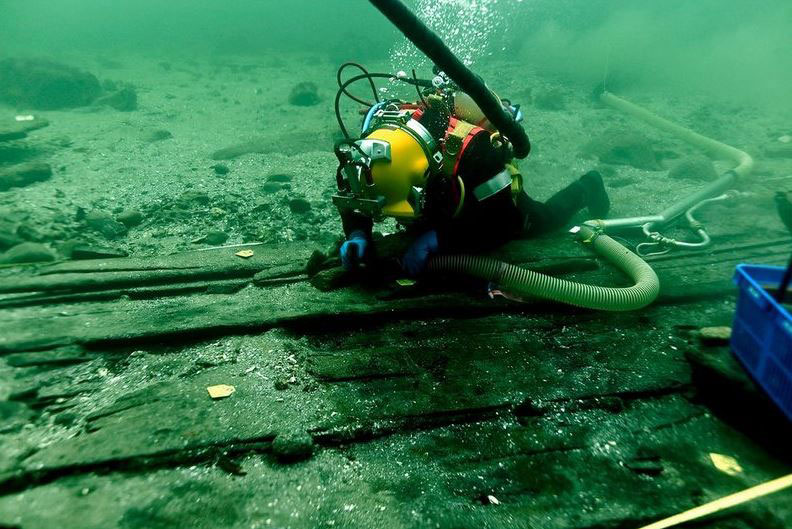
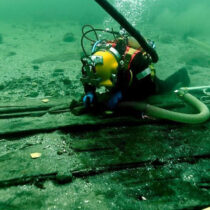
For 600 years, the waters off Copenhagen have hidden an exceptional secret. Now, maritime archaeologists from the Viking Ship Museum in Denmark reveal the discovery of the world’s largest cog – a medieval cargo ship whose size and previously unknown construction details offer new insight into the maritime technology and trade networks of the Middle Ages, shedding light on the scale and organisation of medieval trade across Northern Europe.
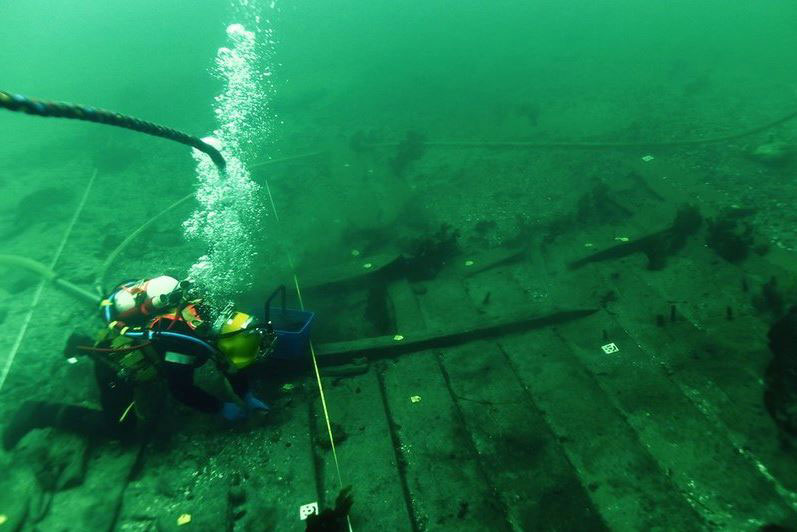
This exceptional find was made in the Sound, the strait between Denmark and Sweden, during seabed investigations for Copenhagen’s new district, Lynetteholm. From the very first dive, the maritime archaeologists sensed they had uncovered something extraordinary. And as they removed centuries of sand and silt, the outline of a remarkable find emerged. Not just any wreck but the largest cog ever discovered, a ship that represents one of the most advanced vessel types of its time and the backbone of medieval trade:
“The find is a milestone for maritime archaeology. It is the largest cog we know of, and it gives us a unique opportunity to understand both the construction and life on board the biggest trading ships of the Middle Ages,” says maritime archaeologist and excavation leader, Otto Uldum.
A medieval super ship
The ship, named Svælget 2 (Svaelget 2) after the channel where it was found, measures approximately 28 metres long, 9 metres wide and 6 metres high, with an estimated cargo capacity of 300 tons. Built around 1410, the cog represents the largest example of its type ever discovered anywhere in the world.
According to the archaeologists, a ship of this size reflects a society in transition, because such a vessel required a well-established trade structure:
“A ship with such a large cargo capacity is part of a structured system where merchants knew there was a market for the goods they carried. Svælget 2 is a tangible example of how trade developed during the Middle Ages,” stresses Otto Uldum.
The cog was an efficient ship type that could be sailed by a remarkably small crew, even when heavily loaded. Large cogs were built to make the hazardous voyage around Skagen from what is now the Netherlands through the Sound and reaching the trading towns of the Baltic. Svælget 2 points directly to the extensive trade networks that bound Northern Europe together in the 15th century:
“It is clear evidence that everyday goods were traded. Shipbuilders went as big as possible to transport bulky cargo – salt, timber, bricks or basic food items,” says Otto Uldum.
The Cog: The ship that transformed Europe
The cog was the super ship of the Middle Ages. Developed in the North Sea region, it made it possible to transport large quantities of goods efficiently and at low cost. This ship type was central to economic development in the 14th and 15th centuries, and with its enormous cargo capacity, it transformed trade patterns. Where long-distance trade had previously been limited to luxury goods, everyday commodities could now be shipped across great distances.
“The cog revolutionised trade in Northern Europe. It made it possible to transport goods on a scale never seen before,” says Otto Uldum.
International Connections
Dendrochronological analysis shows that Svælget 2 was built around 1410 using timber from two regions: Pomerania, which is modern-day Poland, and the Netherlands. By comparing tree-ring patterns with reference data, researchers were able to date the wood and determine its origin. The planks were made of Pomeranian oak, while the frames – the ship’s ribs – came from the Netherlands. This construction pattern suggests that the heavy planking timber was imported, while the frames were cut locally at the building site, reflecting a practical approach and a complex trade network where large quantities of timber moved across Northern Europe.
“It tells us that timber exports went from Pomerania to the Netherlands, and that the ship was built in the Netherlands where the expertise to construct these very large cogs was found,” says maritime archaeologist Otto Uldum.
Unprecedented preservation
Svælget 2 is not only the largest cog ever found; it is also exceptionally well preserved. The wreck was excavated at a depth of 13 metres, where it has been shielded from the forces that normally destroy ships near the coast. Sand has protected the starboard side from keel to gunwale, something never seen before in a cog find. In this area, archaeologists uncovered remarkable traces of the ship’s rigging.
“It is extraordinary to have so many parts of the rigging. We have never seen this before, and it gives us a real opportunity to say something entirely new about how cogs were equipped for sailing,” explains Otto Uldum.
These discoveries give researchers a unique opportunity to study construction details and understand the complexity of medieval sailing ships.
“The finds show how something as complex as the rigging was solved on the largest cogs. Rigging is absolutely central to a medieval ship, as it makes it possible to control the sail, secure the mast and keep the cargo safe. Without ropes and rigging, the ship would be nothing,” says the maritime archaeologist.
 NOTES
NOTES