New analyses of the richly furnished Celtic burial chamber discovered in 2023 near Riedlingen, Germany provide important insights into the burial practices and social structures of the early Celtic period. Although the grave had already been looted in antiquity, numerous remains have been preserved under special conditions, offering valuable information about the status of the buried individual.
Dendrochronological analyses date the construction of the wooden burial chamber precisely to the year 584 BCE. The chamber was part of a burial mound and originally contained a richly equipped grave.
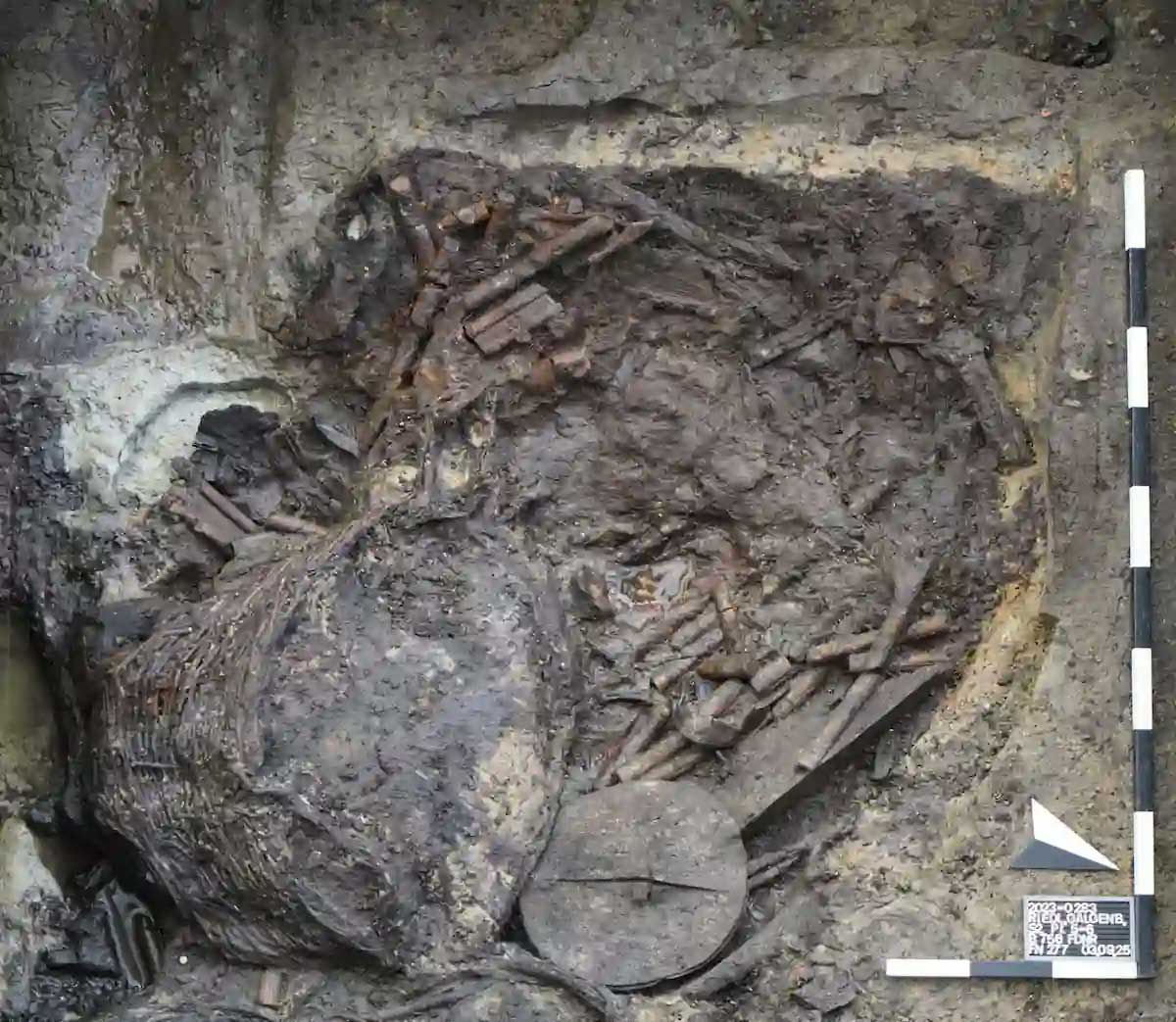
Even in ancient times, tomb robbers had penetrated the chamber via a shaft and removed valuable objects, especially those made of metal. However, they left behind many organic materials. Because the chamber and the looted pit were later filled with water and thus sealed in an oxygen-poor environment, these materials were exceptionally well preserved.
Among the finds are the scattered skeletal remains of a young man aged approximately 17 to 19 years, as well as numerous grave goods. These include wooden objects, textile remains, furs, metal fragments, and components that may have belonged to furniture or a wagon.
Particularly noteworthy are traces left by the grave robbers themselves: a birchwood torch and a resin-rich wooden splint were likely used for lighting inside the chamber. In addition, large wicker baskets were discovered, which were probably used to transport the looted goods.
An especially significant find is a strip of birch bark that likely formed part of a vessel. It bears incised figurative decoration, including the depiction of a stylized stallion. Such representations are extremely rare for the early Celtic period and, until now, have primarily been known from objects made of metal or ceramic. The discovery therefore provides new insights into artistic expression in organic materials.
Overall, the richness of the grave goods indicates that the deceased belonged to the social elite. The finds thus make an important contribution to understanding early Celtic society.
 NOTES
NOTES