In the frame of the TEXNH: Making, creating, and agency networks in the Ancient Mediterranean world lecture series and discussion forum, the Netherlands Institute at Athens invites all interested to the lecture “Interaction among master artisans in Early Mycenaean times”
by
Dr. Nikolas Papadimitriou, Director of the Paul and Alexandra Canellopoulos Museum in Athens
Mr. Akis Goumas, Contemporary jewelry maker and researcher of ancient crafting technologies
Dr. Eleni Konstantinidi-Syvridi, Curator at the Department of Prehistoric, Egyptian, Cypriot and
Near Eastern Collections of Antiquities, Hellenic National Archaeological Museum
Ms Maria Kontaki, Conservator of antiquities and works of art, Department of Conservation and
Archaeometry, Hellenic National Archaeological Museum
Discussant: Dr. Rachel Phillips, A.G. Leventis Fellow 2025-27 at the BSA
18 March 2026, 18.00
at the Netherlands Institute at Athens
11, Makri str., 117 42 Athens
The event will also be streamed live. For online registration please click here
For physical attendance please send an email to: [email protected]
Abstract
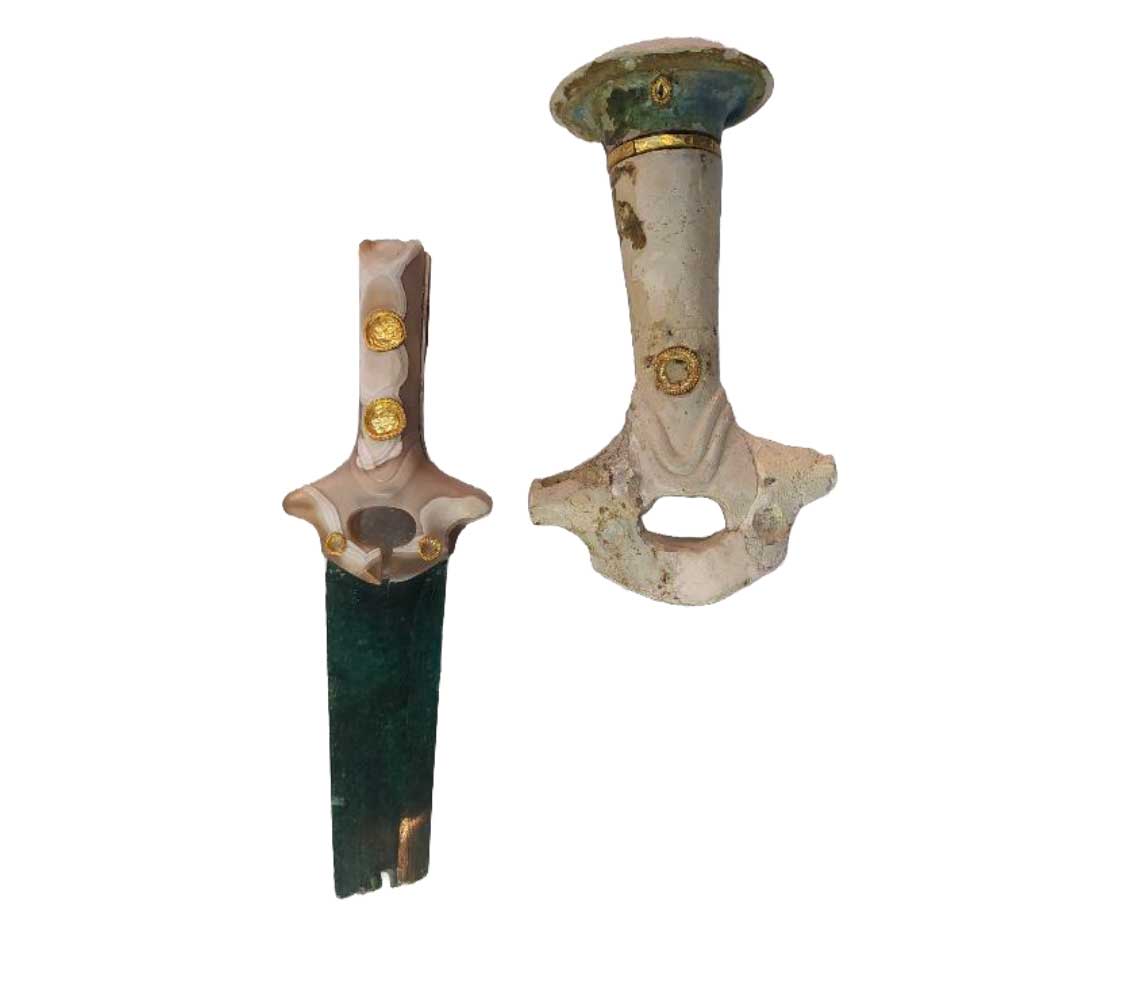
In Early Mycenaean times, numerous swords and daggers were made specifically for funerary display. For the manufacture of these objects, a variety of materials (e.g. copper, gold, ivory, wood) and demanding techniques were used, often on the same weapon. This necessitated the cooperation of different craftspersons. At a slightly later stage, artisans started imitating the handles of prestigious weapons in unexpected materials, e.g. glass and agate. The latter handles looked similar in form to those made of wood or ivory but were crafted with entirely different techniques. In this paper we will discuss these examples of cross-craft interaction (including [a] the cooperation among different craftsperson working on the same sword or dagger, and [b] the interaction among
artisans making similar objects in different materials) and try to understand their implications for the organization of Early Mycenaean workshops for prestigious weapons – especially at the site of Mycenae, where these phenomena are mainly attested. Our research combines microscopic observation of the objects, archaeometric analysis and experimental reconstructions.