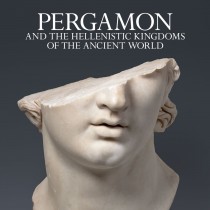
In ancient times, death did not mean the end of social presence: graves, rituals, and commemorative practices kept the deceased present in public and private everyday life and shaped the self-image of entire communities. A central key to understanding ancient societies therefore lies in researching their burial practices. The editied volume Hellenistic Funerary Culture in Pergamon and the Aeolis is dedicated to the question of how memory was shaped, preserved, and repeatedly reinterpreted in Hellenistic Asia Minor.
Burials as places of collective memory
Edited by Prof. Dr. Felix Pirson, Director of the DAI Istanbul, and Prof. Dr. Stéphane Verger, École pratique des hautes études Paris, the 20th volume of Pergamenische Forschungen brings together sixteen topical studies from the fields of archaeology, anthropology, and bioarchaeology.
Their focus lies not only on the material furnishings of graves, but also on the social significance of burial and commemoration. The contributions show how human remains, tomb architecture, inscriptions, and rituals contributed to transforming individual biographies into collective memory: “In this context, the reconstruction of ‘funerary landscapes’ plays an increasingly important role: beyond the individual grave and the necropolis, the spatial relationship to the city, the suburbs, and the landscape, as well as the interaction with the natural environment, were of great importance for the formation of individual and collective memory,” explains Felix Pirson.
The necropolises of Pergamon, Aigai, Kyme, Elaia, Mytilene, and Antandros appear in the different perspectives of the individual contributions as complex spaces of memorial: they are not only important sources for the study of ancient burial practices, but also provide insight into beliefs about afterlife, funeral customs, and social, political, as well as cultural dynamics in Hellenistic Asia Minor through grave goods and inscriptions.
Criminalistic approach to archaeology
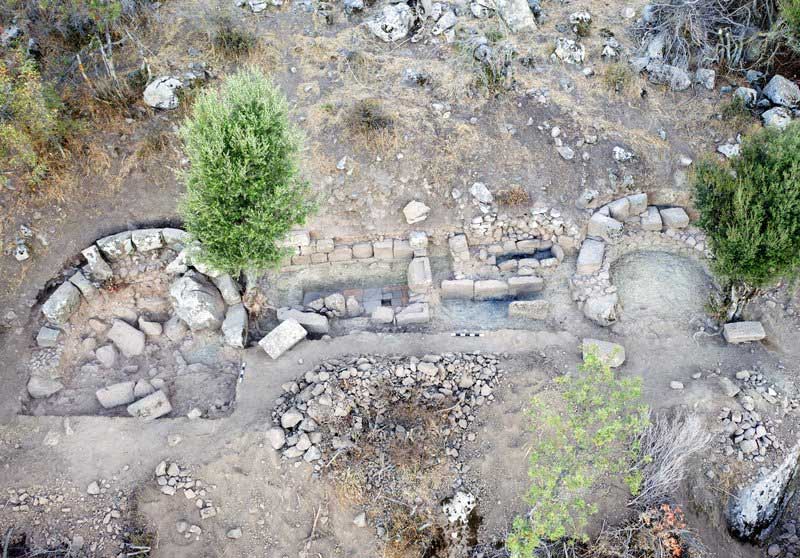
In addition to new perspectives on interpretation, the volume also highlights the potential of interdisciplinary archaeological, natural, and geoscientific research: for the first time, it has been possible to unlock some of the secrets of the monumental burial mound of Yiğmatepe, which served as a burial site for the Hellenistic rulers of Pergamon. Excavations have clarified the complicated construction process, finds and radiocarbon dating shed light on its date of origin and history of use, and geophysical methods enable new hypotheses about its complex interior. Particularly impressive is the reevaluation of an archaeological ‘cold case’ from the early 20th century: The renewed examination of finds from a small burial mound in the vicinity of Yığmatepe has restored the identity of a man who had long remained anonymous. It paints a picture of a man whose grave combines Celtic weapons and burial customs with Anatolian traditions and Macedonian claims to prestige.
Regional traditions and local forms of commemoration
With its historical and landscape focus, this volume offers the first comparative regional study of Hellenistic burial culture in Asia Minor: On this basis, a picture emerges of a largely shared buri-al culture that reveals surprisingly few differences between cities with constructed founding myths and the Hellenistic metropolis in Anatolian Mysia. Instead of fundamental contrasts, local peculiarities come to the fore, offering different possibilities for shaping the culture of commemoration. The research results make it clear that memory was not a static phenomenon, but was constantly renegotiated and adapted to social changes. The funeral landscapes impressively demonstrate how closely death, memory, and social roles were intertwined in the Hellenistic world.
Impetus for international research
With its interdisciplinary and international focus, the volume opens up new avenues for research into ancient memorial culture. It shows how the treatment of the dead provides insight into the values, conflicts, and selfimages of the living. Hellenistic Funerary Culture in Pergamon and the Aeolis thus provides central impetus for international research and opens up new perspectives on how complex socio-cultural phenomena such as death and memory can be reevaluated on the basis of a broad database.
Publication:
Pirson, F. and Verger, S. (eds.) (2025) Hellenistic Funerary Culture in Pergamon and the Aeolis: A Collection of Current Approaches and New Results. Berlin: iDAI.publications/books (Pergame-nische Forschungen): https://doi.org/10.34780/b60xwm79
 NOTES
NOTES