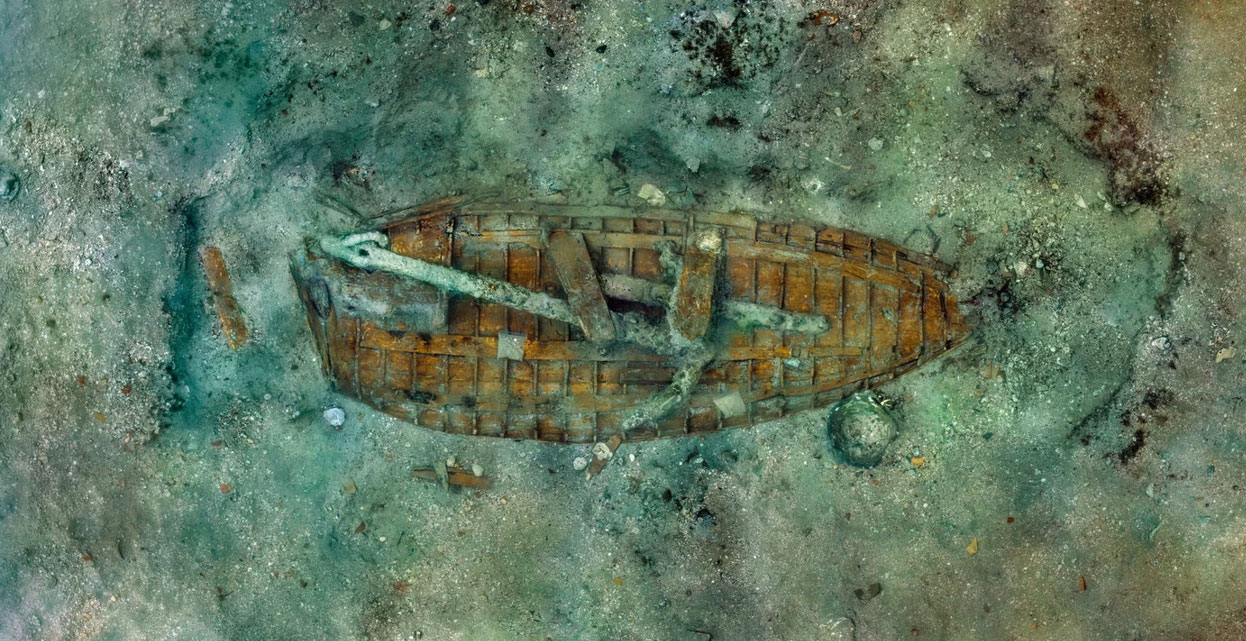
An ancient Egyptian recreational boat, matching a description by the Greek historian and geographer Strabo, has been discovered off the coast of Alexandria, causing excitement in the archaeological community.
The vessel, dating from the first half of the 1st century, was 35 meters long and designed to host a central pavilion with a cabin decorated in luxury. It was found near the submerged island of Antirhodos, which was part of Alexandria’s Great Harbor.
Strabo, who visited the Egyptian city around 29–25 BCE, wrote about these boats:
“These vessels are luxuriously fitted out and used by the royal court for excursions; and the crowd of revellers who go down from Alexandria by the canal to the public festivals; for every day and every night is crowded with people on the boats who play the flute and dance without restraint and with extreme licentiousness.”
The excavations were conducted by the European Institute for Underwater Archaeology (IEASM), under the direction of Franck Goddio, professor of maritime archaeology at the University of Oxford.
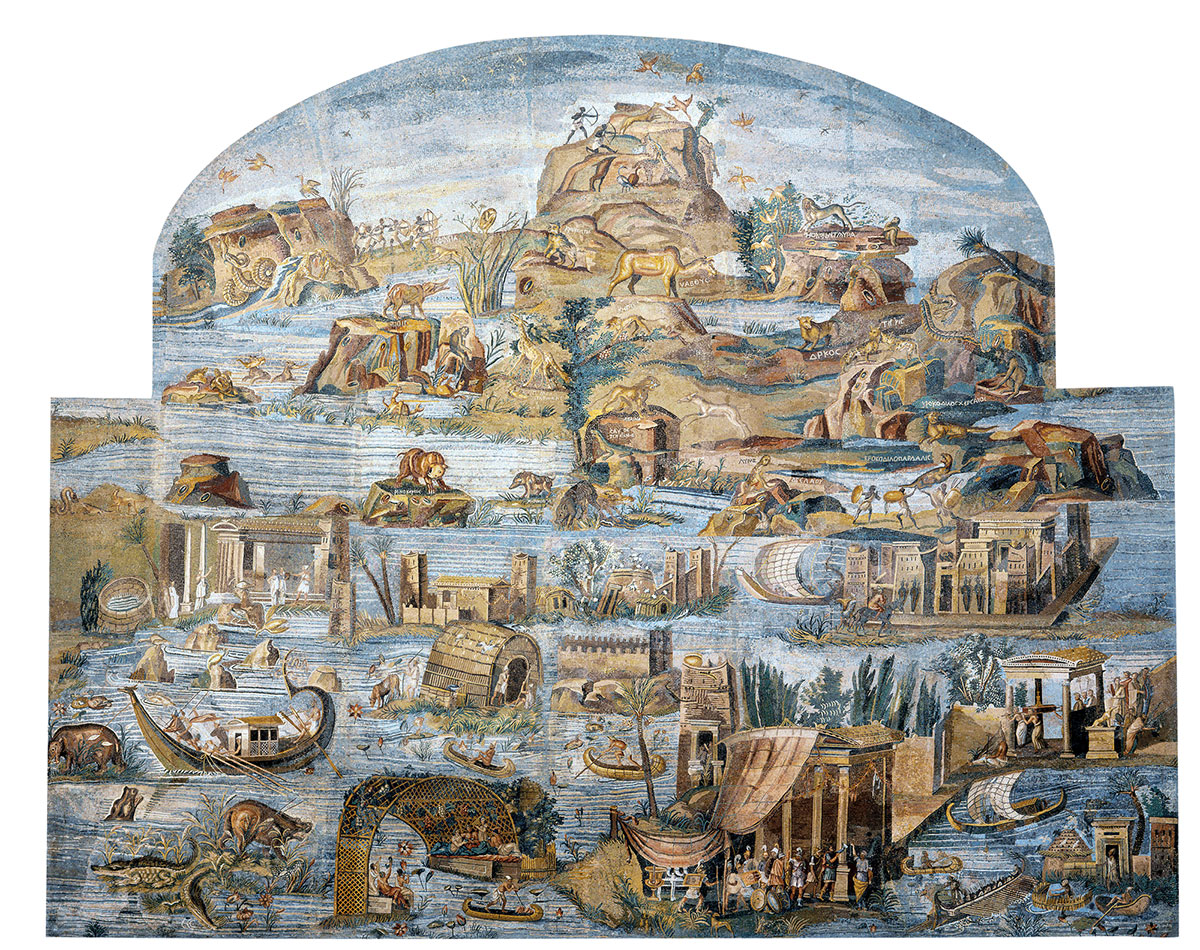
“This is extremely exciting because it’s the first time such a vessel has been discovered in Egypt. These types of boats are mentioned by several ancient authors, such as Strabo, and are also depicted in literature and artifacts – for example, in the Palestrina mosaic, which shows a much smaller version of such a vessel with nobles hunting hippopotamuses. However, until now, no such boat had ever been found,” he told The Guardian.
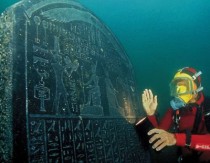
Goddio’s most ambitious projects have taken place off the Egyptian coast, in the eastern harbor of Alexandria and in the Bay of Aboukir. In collaboration with Egypt’s Ministry of Antiquities, he has been exploring – and uncovering – a vast area since 1992.
While the Nile mosaic housed in the Archaeological Museum of Palestrina depicts a vessel about 15 meters long, the newly discovered boat is significantly larger, based on its well-preserved wooden structure. It likely required more than 20 rowers.
It was found just 7 meters underwater and 1.5 meters beneath the sedimentary seabed.
Goddio initially assumed it was two boats, one on top of the other, “because the construction type was very unusual. The bow is flat… and the stern is rounded… so it could navigate in very shallow waters.”
In 2000, one of the most significant archaeological discoveries in recent years took place in the Bay of Aboukir, where the ancient city of Thonis-Heracleion and parts of the city of Canopus were found. Among the impressive treasures recovered were two colossal statues of a queen and a king from the Ptolemaic dynasty.
With its palaces, temples, and the famous 130-meter Lighthouse – one of the Seven Wonders of the Ancient World – Alexandria was one of the most magnificent cities of antiquity.
After a series of earthquakes and tidal waves, the Portus Magnus and parts of the ancient shoreline sank beneath the surface of the Mediterranean, taking palaces and other buildings with them.
 NOTES
NOTES