Life at the Furnace-project (LAF). Archaeological survey in the valley of the Peristerona river and excavation at the site Agia Marina Xyliatou-Mavrovouni 2025.
Directors: Dr Kristina Winther-Jacobsen (University of Copenhagen) and Dr Angus Graham (Uppsala University), in collaboration with the Cyprus Institute. Excavation director: Dr Roser Marsal (UniversitatAutònoma de Barcelona).
The Department of Antiquities, Deputy Ministry of Culture, announces the completion of this year’s campaign in the valley of the Peristerona river, led by the universities of Copenhagen and Uppsala.
Through the investigation of a combination of material culture and environmental data the Life at the Furnace-project (LAF) investigates how the copper production associated with foreign control of Cyprus under the Roman Empire affected the complex human/social organization and environment in the north-western Troodos foothills. The study focuses on the landscape of the Peristerona River valley providing the context for the Agia Marina Xyliatou-Mavrovouni slag heap (Orounta, Kato Moni, Ayia Marina Xyliatou) as well as the wider Troodos hinterland of Xyliatos and Nikitari. The project completed a field season on November 7, 2025.
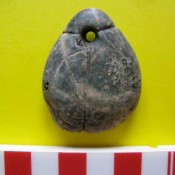
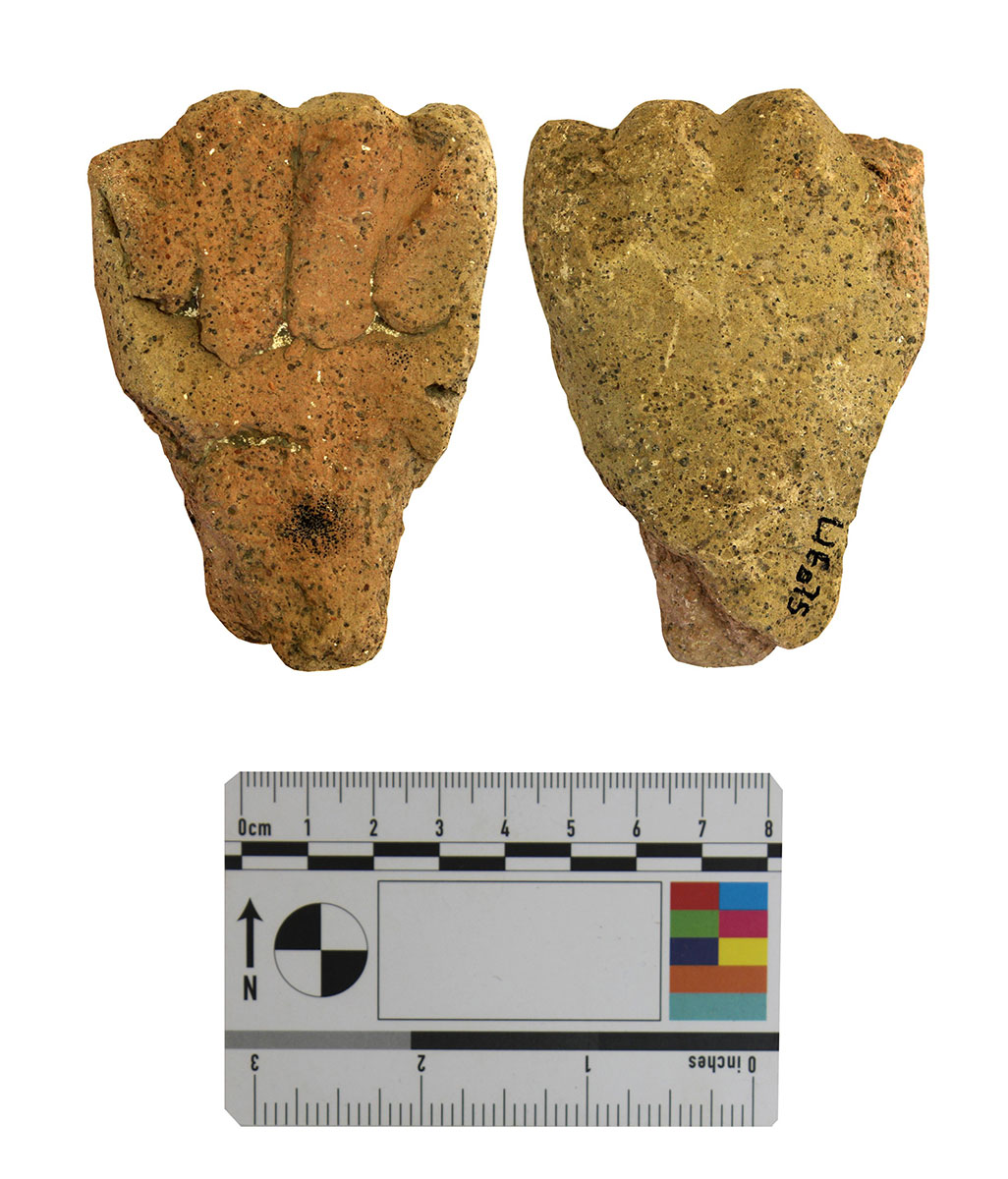
The archaeological surface survey has continued to provide chronological context for the activities associated with the Agia Marina Xyliatou-Mavrovouni slag heap. This season’s work focused partly on the small, cultivated plateau immediately north of the village of Agia Marina Xyliatou. Here an Iron Age sanctuary was recorded based on the presence of fragments of figurines including handmade horses, a bull, and large human figures (fig. 1), as well as a mould made Astarte figurine. During the Hellenistic-Early Roman and Late Roman periods the sanctuary was replaced by a settlement. It is probably the settlement, which was involved with the production of copper evidenced by a discrete scatter of slag at the site. Survey also continued at the crossing of the Peristerona Riverlocated on the border of the Kato Moni and Orounta district, where the context of the Chalcolithic site of Stavros tou Kounti was mapped.
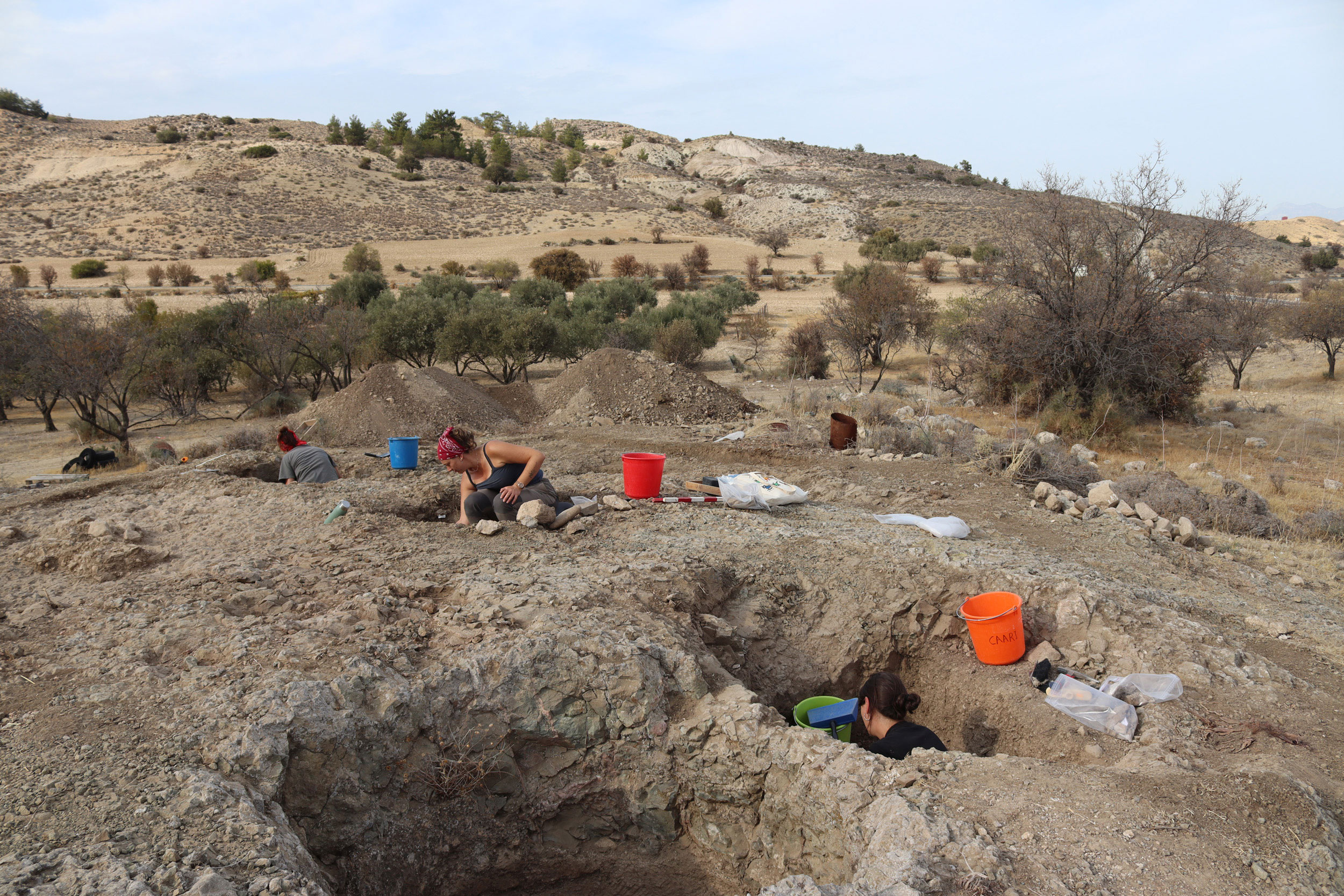
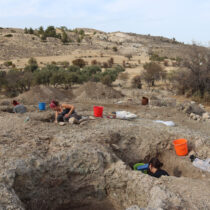
On the knoll of Agia Marina Xyliatou-Mavrovouni, the project initiated an excavation of the structures identified during the preliminary surface clearance conducted in November 2024. The excavation has revealed a complex water-management system spread across three artificial terraces, including basins, cisterns, and plastered hydraulic installations (fig. 2). The material used to backfill these water installations dates mainly from the Late Hellenistic to the Middle Roman period, indicating that the settlement reached a notable phase of activity during this period. The relationship between the water-management system and the smelting of copper is yet to be determined.
The project is supported by the Carlsberg Foundation and the Enboms Foundation.