Researchers have deciphered the diet of an important nomadic people in Eastern European history.
By analysing dental calculus, the international team – which included Griffith University researchers – provide the first direct evidence that the diet of the Scythians included milk from horses and other ruminants.
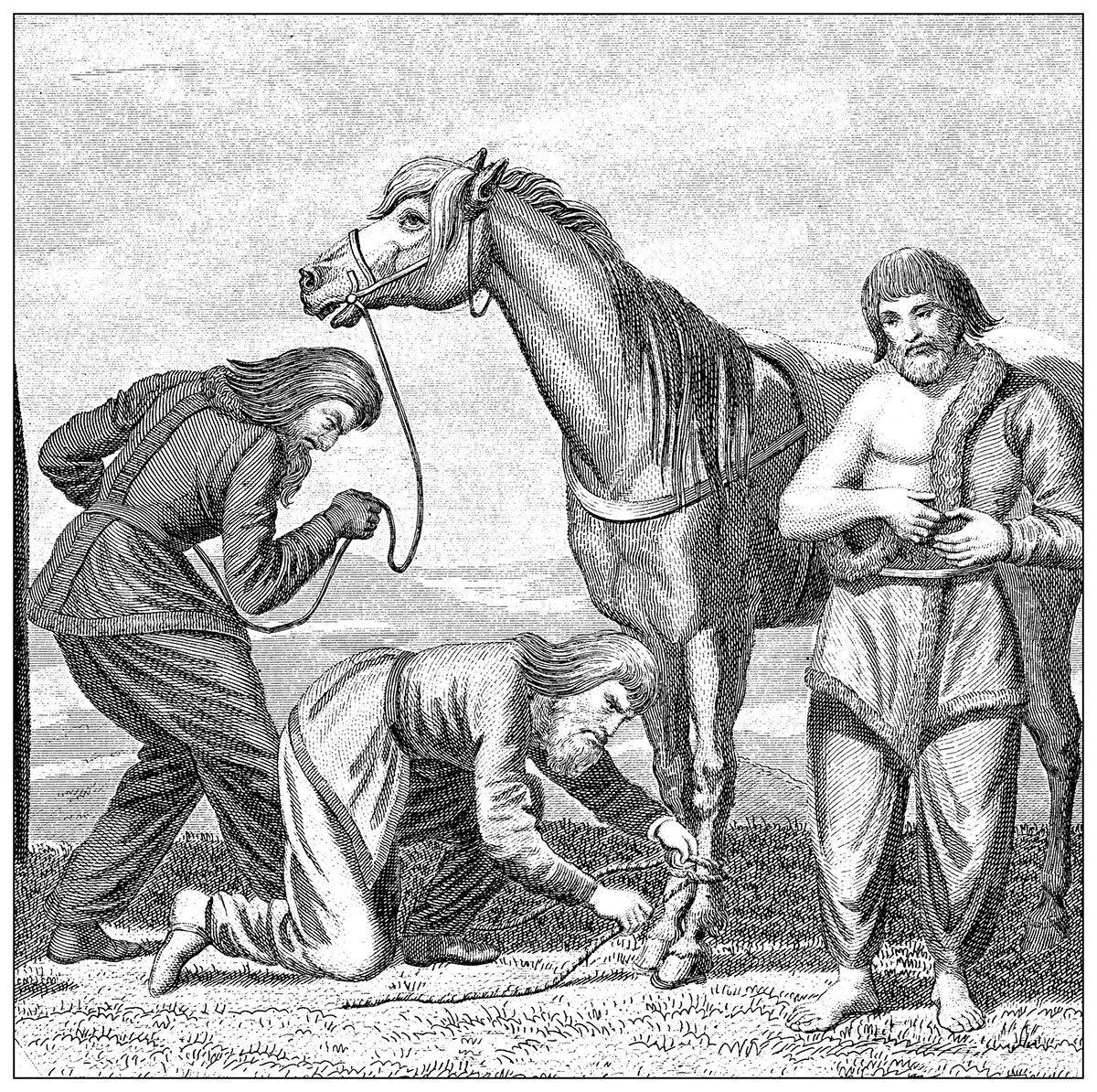
For centuries, the Scythians had been immortalised as an empire of horse-back warrior nomads from the Iron Age steppe.
However, recent genetic and isotopic studies had begun to dismantle this myth, revealing the ‘Scythians’ were not a single group, but a diverse, multi-ethnic population of heterogenous origins with population differences in their regimes ranging from pastoralism to agriculturalism.
Building on this shifting narrative, a new study in PLOS One offers the most detailed look yet at the dietary practices of Scythian-era populations.
By applying advanced paleo-proteomic analysis to ancient dental calculus (mineralised plaque) from individuals from Bilsk and Mamai-Gora in modern-day Ukraine, an international research team identified species-specific evidence of dairy consumption through whey, curd, and milk-fat-globule membrane proteins derived from ruminant – such as cattle, sheep, and goats – and horses.
“Finding horse milk proteins in ancient plaque from Scythian era individuals is a major breakthrough,” said Jaruschka Pecnik, first author of the study and PhD Candidate supervised by Dr Shevan Wilkin from Griffith University’s Australian Research Centre for Human Evolution.
“It proves that horses were part of their food system, but the scarcity of these findings raises questions about whether this reflects a preservation bias or a cultural pattern – perhaps a status-based hierarchy or a specific division of livestock functionality.”
“Dental calculus is a remarkable reservoir of personal history,” Dr Wilkin added.
While the study provided evidence for equine dairy consumption, the researchers noted the journey to understanding Scythian food systems was just beginning.
The research team emphasised future studies would need to assess the dental calculus of a much larger number of individuals across the Eurasian steppe to resolve current questions and further clarify the dynamic, multi-faceted food systems of the Iron Age steppe people.
The study ‘Paleo-proteomic analysis of Iron Age dental calculus provides direct evidence of Scythian reliance on ruminant dairy’ has been published in PLOS One.
 NOTES
NOTES