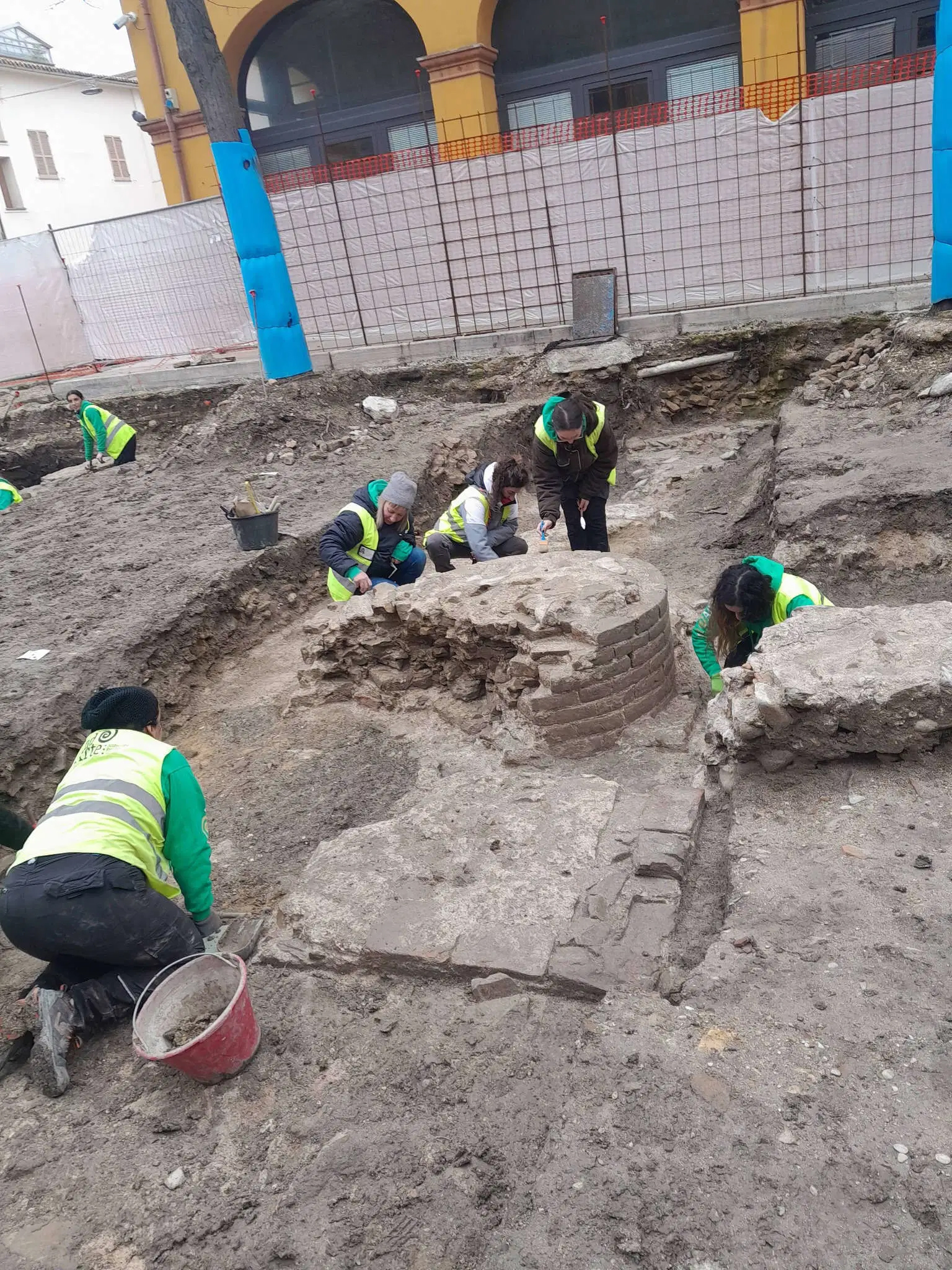
In a remarkable archaeological breakthrough, Italian researchers have uncovered the remains of a Roman basilica believed to have been designed by Vitruvius, the famed 1st-century BC architect.
The structure, found in the city of Fano, aligns precisely with the layout described in Vitruvius’ iconic treatise De Architectura.
“It’s a sensational finding,” said Italian Culture Minister Alessandro Giuli, calling it something “our grandchildren will be talking about.” The mayor of Fano, Luca Serfilippi, echoed that excitement, saying that researchers have been searching for this basilica for over 500 years.
The basilica featured a rectangular layout with ten columns along the long side and four on each short side. Using Vitruvius’ written descriptions, archaeologists predicted the exact location of a key column — and found it immediately. Regional superintendent Andrea Pessina commended on these precise descriptions by saying: “Few things are certain in archaeology, but we were impressed by the precision.”
Further excavation will determine how much of the structure remains intact and whether the site can be opened to the public.
 NOTES
NOTES