Archaeologists working ahead of construction for a new cultural center in the Orto Fontanelle district of Gela, Sicily, have uncovered a remarkable artifact that sheds new light on ancient Greek craft and ritual practices.
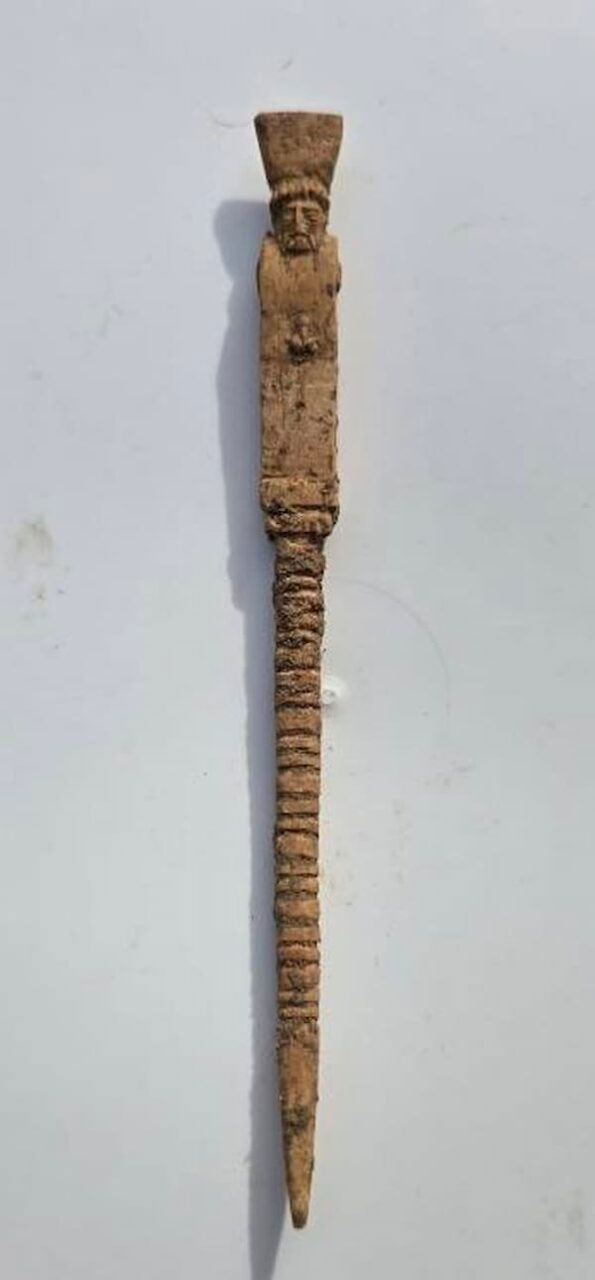
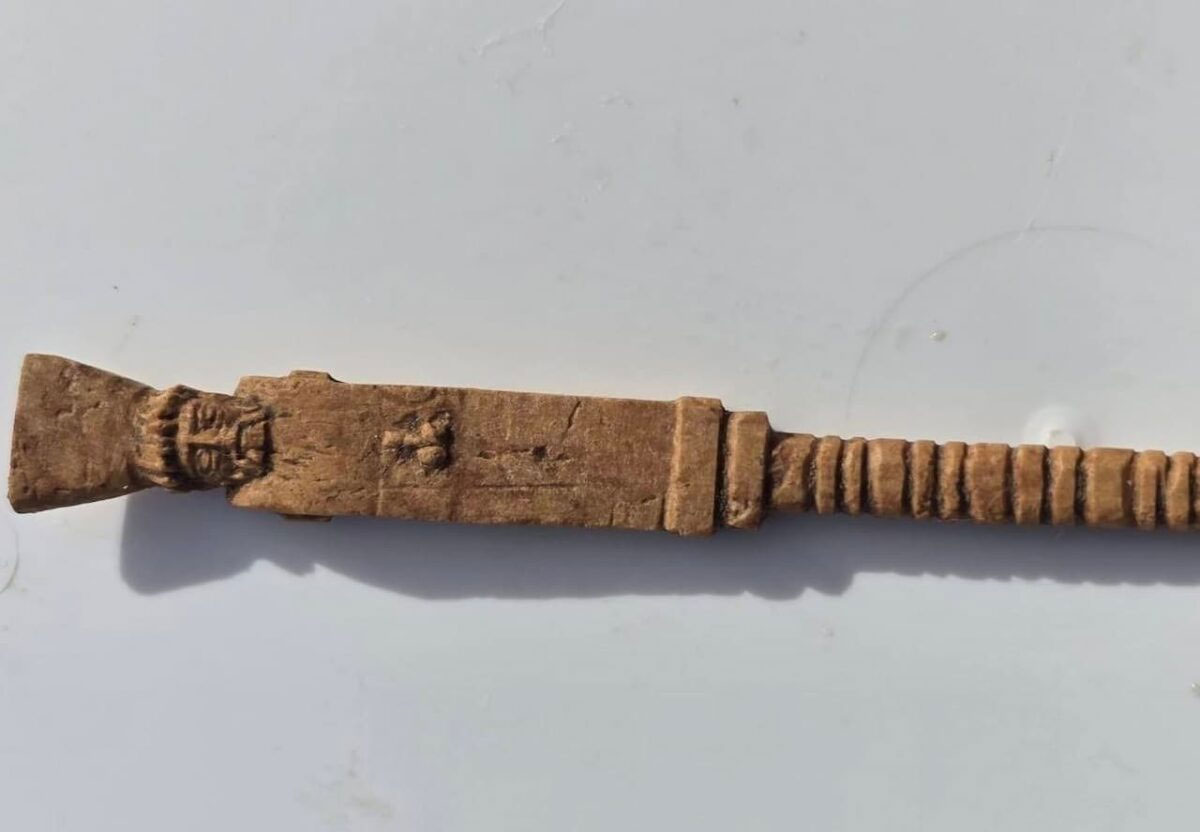
The find is a bone stylus and is exceptionally well preserved. It is 13.2 cm (5.2 inches) long and stands out not only for its intact condition but also for its detailed decoration, something rarely seen in styluses from this period.
What makes the object truly striking is its iconography. The top of the stylus features a carved male head interpreted as Dionysus, fashioned in the style of a herm. Along the middle of the stylus is a meticulously carved erect phallus, combining Dionysian imagery with explicit symbolism that suggests meanings beyond ordinary practical use.
The excavation is being led by archaeologist Gianluca Calà, under the supervision of the Soprintendenza per i Beni Culturali e Ambientali di Caltanissetta and on behalf of the Municipality of Gela. The dig also revealed remains of a large Hellenistic‑era neighborhood, currently under study.
Based on its archaeological context, the stylus is dated to the 5th century BC, a time when Gela was a flourishing Greek colony.
Experts note that although styluses were everyday tools for artisans, the fine workmanship and fragile material of this example suggest it may have held a special symbolic or ritual role. It could have been a high‑status object or even a votive offering, possibly dedicated for protection of the workshop, for artistic inspiration, or creativity, rather than a utilitarian implement.
The stylus was preserved thanks to an ancient structural collapse at the site; the debris was later reused as fill, effectively sealing and protecting the fragile object until its modern discovery.
Conservation work is planned, after which the stylus is expected to be displayed publicly as part of Gela’s museum collections, highlighting both the cultural importance of the find and the long history of the ancient city.
 NOTES
NOTES